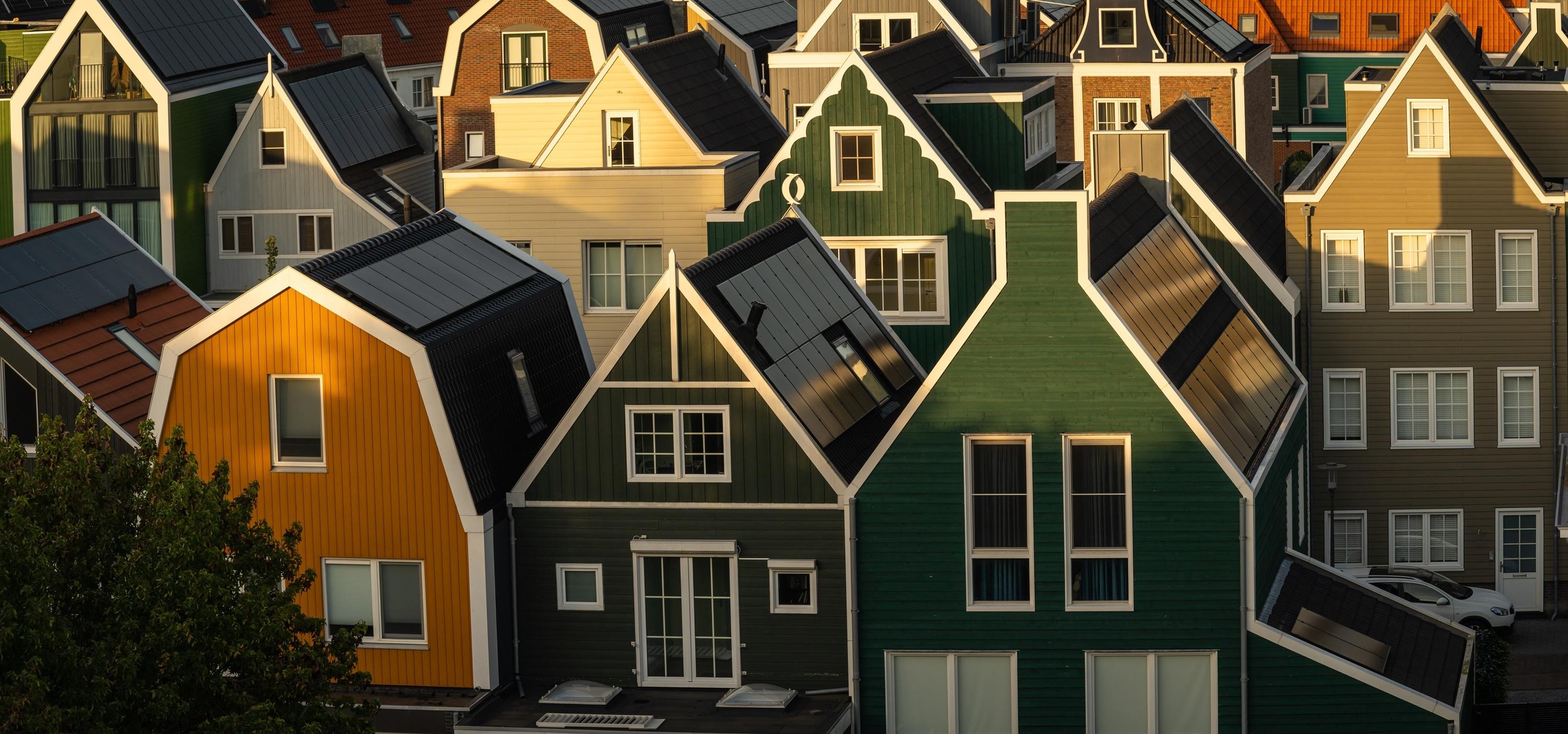
The Dutch housing market remains tight, and anyone looking for a home will sooner or later be faced with an important choice: should you go for a new-build home, or choose an existing home? Both options have clear advantages and disadvantages, with differences in price, energy performance, location and tax treatment playing a major role.
In this article, we list all the factors in detail, from price differences to energy labels, from tax benefits to points to consider when buying “off plan”.New-build: modern, energy-efficient and hassle-free, but at a higher price
In recent years, the average price of new-build homes has been structurally higher than that of existing homes. This difference can largely be explained by a combination of factors: the sharp rise in construction costs, caused by more expensive materials and a shortage of skilled workers; stricter sustainability requirements, such as the BENG standards, which oblige developers to invest significantly in energy-efficient technologies and high-quality insulation; and modern amenities that are built in as standard, including underfloor heating, heat pumps and other innovative systems that increase comfort but also drive up construction costs. As a result, new-builds are more future-proof, but often also noticeably more expensive to purchase.
Advantages of new-build homes
- Excellent energy performance (often A+++ or energy neutral)
You save significantly on monthly costs and are prepared for future regulations.
- Low maintenance in the first few years
Everything is new, from the roof to the installations.
- No transfer tax (usually)
With new-build homes, you pay VAT, but no 2% transfer tax.
- Customise to your liking
With new-build properties, you can design the house entirely to your own specifications.
- Guarantee via Woningborg or SWK
Protection against construction defects or contractor bankruptcy.
- Higher purchase price
New-build properties are rarely cheaper than older ones.
- Longer waiting time
It can take 1 to 2 years from purchase to completion.
- Uncertainty when buying “off plan”
You cannot walk through the house yet; you are buying based on drawings.
- Often smaller plots and gardens
Scarce space in new-build projects.
- Location is fixed
New-builds are often located on the outskirts of cities or in expansion districts.
Existing homes: location, character and immediate availability
Existing homes are generally cheaper to purchase than new-build homes, but in practice this price advantage often turns out to be less significant than it appears at first glance. Many older homes have overdue maintenance or outdated installations, which means that buyers are faced with renovation costs for items such as the roof, window frames, pipework or the central heating system after purchase.
Advantages of existing properties
- Immediate move-in possible. Ideal for those who need a home quickly.
- Better locations. Often closer to city centres, amenities and public transport.
- Character and charm. 1930s homes, listed buildings, green residential areas.
- Lower purchase price than new-build properties (on average).
Disadvantages of existing properties
- Lower energy efficiency. Energy labels C to G are still common.
- Higher maintenance costs. Think of the roof, foundations, window frames, installations.
- Transfer tax of 2%. Unless you meet the conditions for a starter exemption.
- Risks associated with hidden defects. A structural survey remains essential.
Energy efficiency: does the energy label determine the price?
Energy efficiency is playing an increasingly important role in property values: houses with energy labels A or B are generally sold more quickly, valued higher and sometimes even financed more favourably thanks to sustainability discounts on mortgage interest rates.
Homes with a low energy label, such as E, F or G, lose value: buyers take higher energy costs into account, factor in the costs of sustainability during negotiations, and this creates a clear price difference compared to more energy-efficient homes.
Although location is still the number one factor for value, the influence of energy efficiency is growing every year.
Location remains king, even in 2025 and 2026
Whether a home is located in the Randstad, in a growing municipality or in a shrinking region, location remains the strongest driver of price. A well-located older home can therefore easily be more expensive than a new-build home further away from the centre.
New-build properties benefit from new amenities, modern infrastructure and often car-free, child-friendly neighbourhoods, but ultimately, the lively city centre remains more attractive than a new neighbourhood on the outskirts.
Are there tax benefits for new-build properties?
Yes, there are three tax benefits that buyers often overlook:
1. No transfer tax on new homes
You pay 21% VAT, but no 2% transfer tax. For a home costing € 450,000,- this saves you € 9,000,-.
2. Lower notary fees
Because there is no existing owner, the transfer of ownership as with existing construction does not apply.
3. More mortgage scope for sustainability
New-build properties meet modern requirements, so banks often charge lower rates or offer extra borrowing scope for solar panels or heat pump upgrades.
Buying a new-build home that has yet to be built is exciting and riskier than viewing an existing home. Pay particular attention to:
- Content and dimensions in NEN standards. How exactly is the living area calculated?
- Additional work prices. Kitchen upgrades, extra sockets, extension options
- Completion date and delays. Is there a penalty clause for the builder?
- Level of finish. Shell, ready to wallpaper or ready to move in?
- Situation sketch vs. reality. How much of the surrounding area has already been developed? Are green spaces guaranteed or indicative?
- Building guarantee and insurance. Security in the event of bankruptcy or defects.
- Energy performance and installations. Heat pump, ventilation system, solar panels, what is included?
An additional advantage is that when purchasing a new-build home, you do not have to deal with the phenomenon of overbidding, because the selling price is fixed and allocation is usually done by lottery or registration. This means you know exactly where you stand financially in advance.
There is no universal right or wrong answer, but it is clear that new-build homes are more expensive, but future-proof and energy-efficient; that existing homes are usually cheaper to purchase, but may require higher maintenance and sustainability costs later on; that the energy label plays an increasingly important role in pricing; that the location, regardless of condition or label, ultimately remains the most important determinant of value; and that buying off-plan brings extra uncertainties, but also offers tax advantages and modern living comfort.
Are you currently looking for a new home? Then let a purchasing agent support you, who will think along with you and help you make the right choices.